Coaster Elements
Lateral Gs Explained – Theme Park Definition
Also known as: Laterals
Lateral Gs (lateral G-forces) are the sideways accelerations riders experience when a coaster changes direction in the horizontal plane — on banked turns, unbanked transitions, helices, and direction changes. Well-designed laterals are smooth and controlled, contributing to an energetic and engaging ride experience. Poorly engineered or rough laterals feel like being thrown sideways against the restraint or seat back, which can be uncomfortable or even bruising.
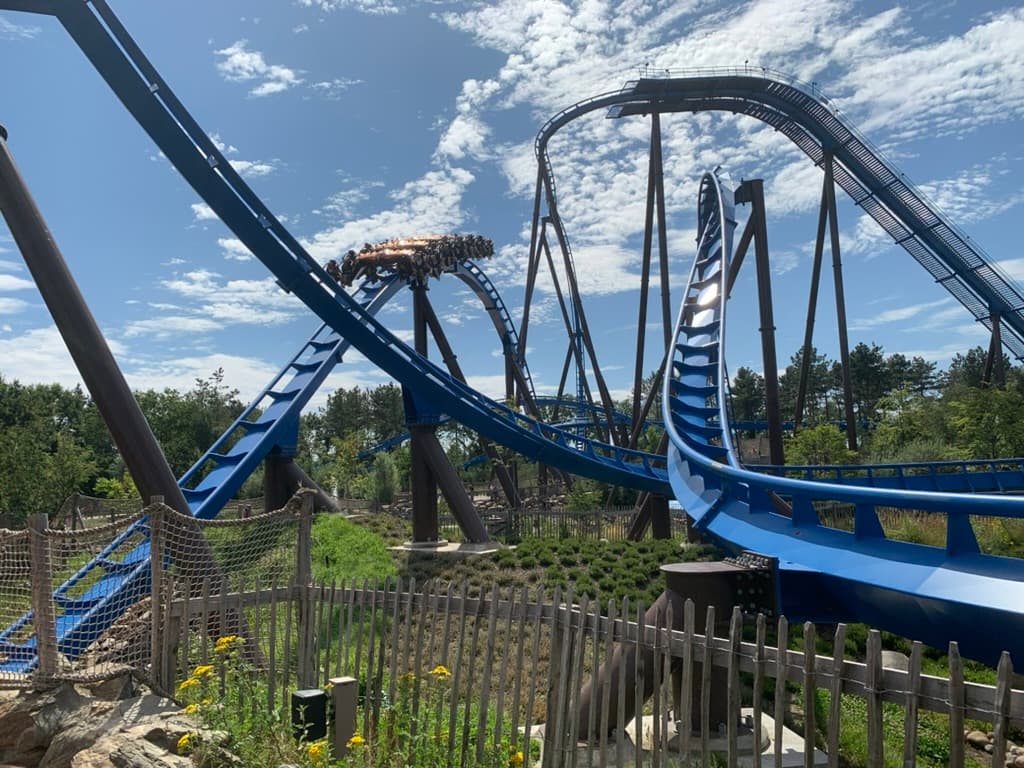
Enthusiasts distinguish between smooth, intentional laterals — like those found in the sweeping low turns of a classic wooden coaster or the exits of a well-banked steel turn — and harsh, unintended laterals produced by track deterioration or poor engineering. Wooden coasters are especially associated with lateral movement: the flex in the track and the side-to-side energy of unbanked turns is considered part of the authentic wooden coaster experience. Smooth lateral G sequences in a helix section, like those on Balder at Liseberg, are often cited as highlights by coaster enthusiasts.