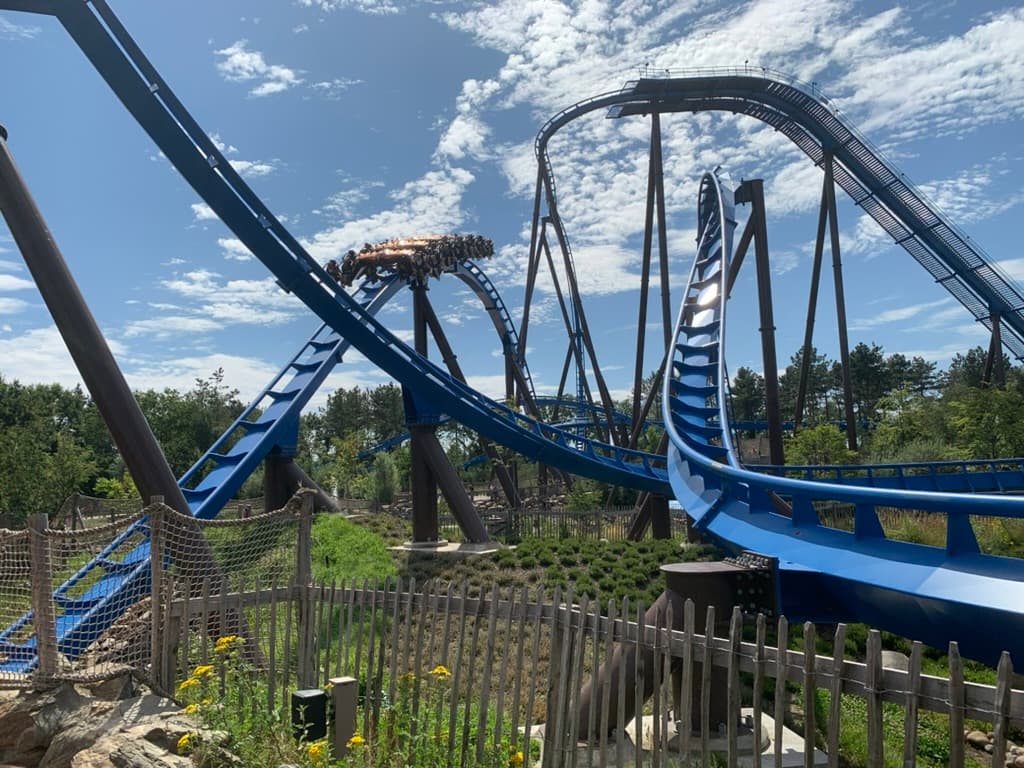
Coaster Elements
G-Force Explained – Theme Park Definition
G-force (gravitational force equivalent) measures the acceleration a rider's body experiences relative to Earth's gravity. Positive G-forces (above 1G) press riders into their seats as the train pulls through a valley or tight curve — the same force that makes you feel heavy in a fast car. Negative G-forces (below 0G) lift riders from their seats, creating airtime. Lateral G-forces act sideways, pushing riders across their seat on turns and transitions.
Roller coasters are designed to sequence these forces deliberately. A sustained 4–5G valley is the hallmark of a powerful first drop transition. A brief −0.5G to −1G moment on an airtime hill produces the signature floating sensation. Most coasters target a range of 0–5G of sustained positive G-force, with brief spikes above this for dramatic effect. Sustained high-G exposure beyond a few seconds can cause discomfort or greyout; well-designed coasters balance intensity peaks with recovery sections.